en
en English
 中文简体
中文简体 Español
 Deutsch
A plastic bakery box solution is often tested outside the bakery counter. Once desserts leave the production area, packaging needs to handle a different environment. Delivery movement, stacking, temperature changes, and frequent handling all create challenges that are not visible during simple product display.
For bakeries and food suppliers, the purpose of packaging is not only to hold a dessert. It also needs to help maintain the original condition of the product until it reaches the final customer.
Transportation Creates New Packaging Requirements
A decorated cake may look great before leaving the bakery.
The situation changes during delivery.
The box may be moved several times.
It may be placed with other packages.
It may experience vibration during transportation.
These situations require packaging with suitable structural support.
For plastic bakery boxes, manufacturers consider how the container reacts during normal movement rather than focusing only on appearance.
A box that looks attractive but cannot handle daily transportation may create unnecessary problems for bakeries.
The Connection Between Lid And Base Matters
The lid is one of the many important parts of a bakery container.
During delivery, the upper section needs to remain connected with the base.
A weak connection may affect the protection of the dessert.
A difficult closing design may slow down packaging work.
Because of this, manufacturers pay attention to the connection structure during product development.
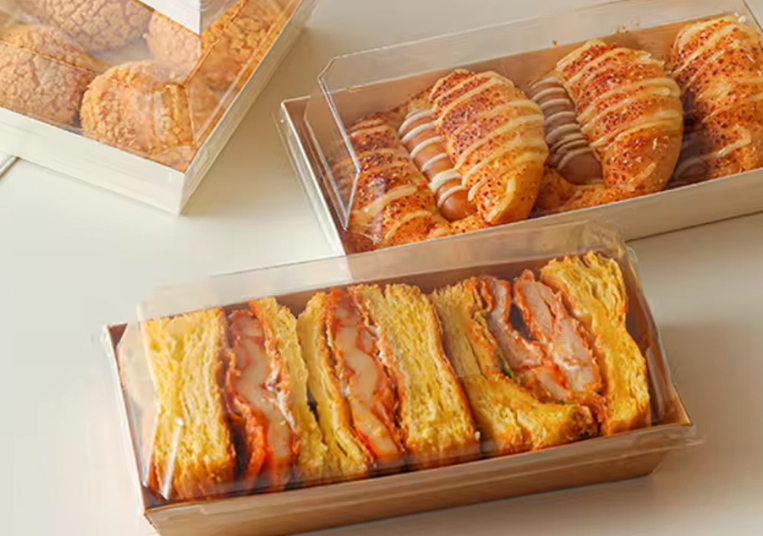
The hinge area, locking points, and closing method are adjusted according to the expected usage.
For plastic bakery boxes, these small structural decisions influence how the package performs during real handling.
Space Design Protects Decoration
Bakery products are often sensitive to contact.
Cream decoration.
Chocolate details.
Fruit toppings.
Even small pressure from the packaging may affect the final appearance.
A suitable internal space allows the dessert to remain positioned correctly inside the container.
Manufacturers consider height, width, and shape when developing different box models.
The goal is not simply to make a larger container, but to create a space that matches common bakery products.
Repeated Opening Tests Improve Practical Use
Bakery workers open and close containers many times every day.
A packaging design that works once may not be suitable for continuous use.
During product development, manufacturers often test repeated opening and closing movements.
They observe:
hinge movement
lid connection
closing condition
overall shape retention
These practical tests help improve the experience for bakery staff who handle packaging regularly.
Different Products Need Different Structures
Not every bakery item requires the same type of container.
Small pastries.
Individual desserts.
Large cakes.
Each product creates different packaging requirements.
This is why plastic bakery boxes are available in different sizes and structures instead of following one fixed design.
Manufacturers adjust dimensions and shapes based on the products they are designed to hold.
This flexibility allows bakeries to select packaging according to their production needs.
Packaging Becomes Part Of The Delivery Process
Modern bakery sales increasingly include takeaway and delivery services.
As this trend grows, packaging has become connected with the entire customer experience.
The dessert needs to arrive in good condition.
The container needs to remain practical for bakery workers.
The structure needs to support repeated daily use.
For plastic bakery boxes, these requirements come together through material selection, structural design, and production experience.
A successful bakery container is not only created for the moment when a customer sees the dessert. It is designed for the complete journey from preparation to transportation and finally to delivery.